
SAVOIE · TARENTAISE · THE ISÈRE — CLASS III–IV
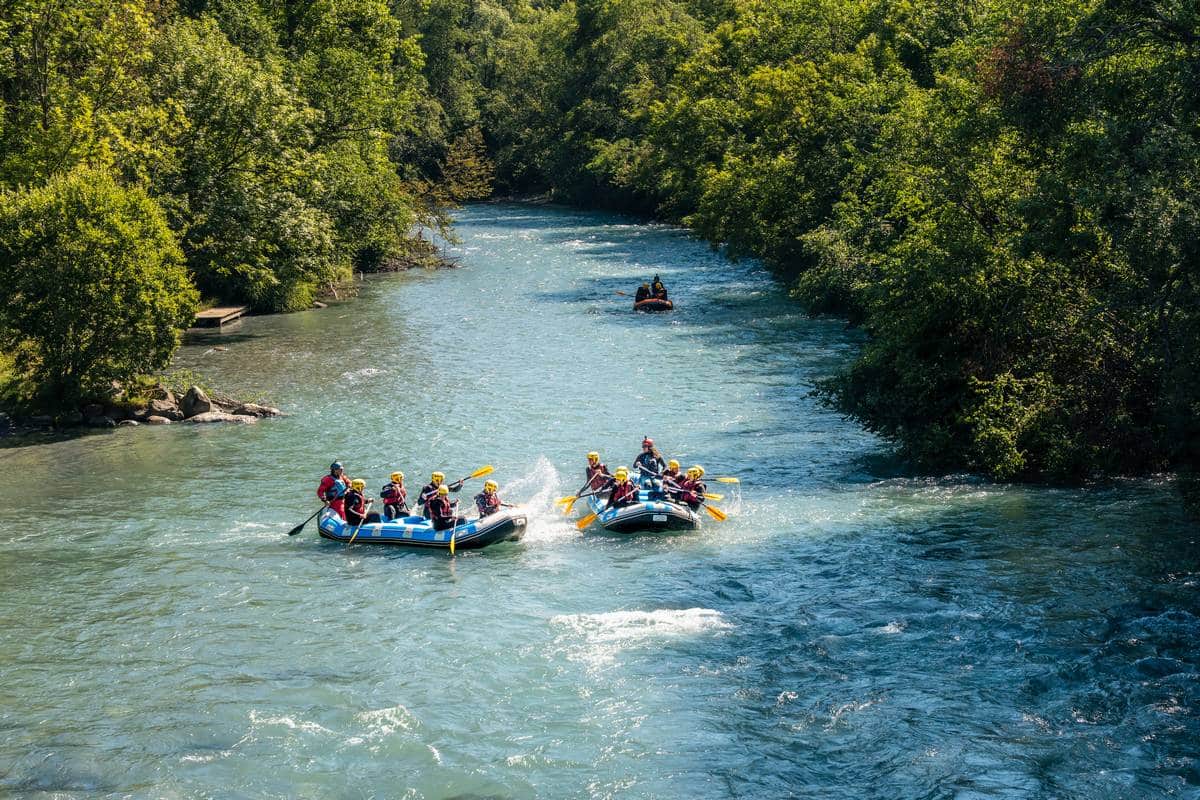
The Isère is one of the most famous rivers for rafting in France. Set in the Tarentaise valley, it offers an outstanding run between Bourg-Saint-Maurice and Aime-la-Plagne. Thanks to its steady flow and varied rapids, rafting the Isère suits complete beginners and thrill-seekers alike. In this complete guide, discover why the Isère is one of the best rafting destinations in Savoie, which sections are the most popular, and how to plan your descent.
Why the Isère is perfect for rafting
The Isère has everything you want for rafting.
A steady flow
The river benefits from a regular, reliable flow through the rafting season, sustained in part by the release from the upstream hydro plant. That means the runs stay readable and the rapids form well — a guaranteed minimum keeps the river runnable even in high summer.
Varied rapids
The Isère mixes lively wave trains with proper whitewater. The grading runs from Class III warm-up rapids to the Class IV rapids of Aime, the highlight of the run. It’s this variety that makes the river fun for a first-timer and still exciting for seasoned paddlers.
An exceptional setting
You paddle in the heart of the Alps, between wild banks, forests and the peaks of the Tarentaise — a spectacular backdrop from start to finish.
Where to raft on the Isère
The rafting section of the Isère runs through the Tarentaise valley, between Bourg-Saint-Maurice and Aime-la-Plagne, where our Savoie base is located (Les Îles, Macot-la-Plagne). It’s easy to reach from the major Tarentaise resorts and from Chambéry, Annecy or Lyon.
The most popular rafting sections
Two stretches stand out:
- The rapids of Aime — the heart of the river, a Class IV sequence of six named rapids (the Ham Slicer, the 400 Metres, the Dining Room, the Dessert…). We break them down one by one in our dedicated guide: the rapids of Aime explained.
- The Centron gorges — steeper and wilder, a more enclosed section that pairs beautifully with the rapids of Aime depending on the day’s water level.
Before them, gentler Class III rapids let the crew warm up and learn to paddle together.
Rafting the Isère: who is it for?
Almost everyone — as long as you can swim. No previous experience is required: the trip is led by a state-qualified guide who adapts the descent to the crew. It’s a great outing for families (from age 8, depending on the run), for groups of friends, and for anyone after a first taste of whitewater. All gear is provided (wetsuit, buoyancy aid, helmet, paddle) and the safety briefing is part of every trip.
When to raft the Isère
The rafting season runs from June to September, with a guaranteed minimum flow. June usually brings the biggest volumes thanks to the snowmelt — the most dynamic conditions. July and August offer steadier flows and warmer water, ideal for families and first-timers. The exact run is always decided on the day, based on the level.
Rafting near the Tarentaise ski resorts
In summer, the Tarentaise is not just about skiing. Rafting on the Isère is the perfect warm-weather activity a short drive from the big resorts — La Plagne, Les Arcs, Val d’Isère, Tignes, Courchevel and Méribel. A morning or afternoon on the water fits easily into a mountain holiday.
Book a descent on the Isère
Ready to run the best river in the Alps? Discover our rafting trips in Savoie and pick the descent that suits your group. Our team has been on this river since 1984.
Book my rafting descent on the Isère →
Frequently asked questions
Do you need experience to raft the Isère?
No. The descent is accessible to beginners and led by a state-qualified guide. You simply need to be able to swim.
What is the minimum age?
From 8 years old, depending on the section and the water level. All safety gear is provided.
When is the best time to raft the Isère?
From June to September. June generally has the biggest volumes thanks to the snowmelt; July and August offer steadier flows and warmer water.
Where does the descent take place?
In the Tarentaise valley, between Bourg-Saint-Maurice and Aime-la-Plagne, from our Savoie base at Macot-la-Plagne.
How difficult is it?
The Isère is graded Class III–IV. The highlight is the Class IV rapids of Aime, which a guided raft handles safely.